
Bread slicers
Professional bread slicers for bakeries are key pieces of equipment in every modern bakery, bakery shop and catering outlet. With a production count of hundreds of loaves per day, manual bread slicing is inefficient in terms of time and cost. Our bread slicing machines allow you to work efficiently at speeds of up to 1,500 loaves per hour, while maintaining an even slice thickness and intact product shape. Bagmasz offers automatic, semi-automatic, self-service and belt slicers that will fully automate your production process thanks to packaging and clipping systems.
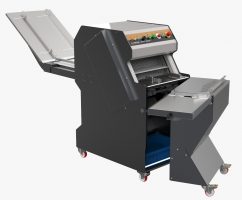
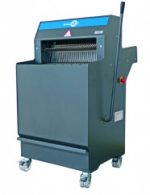
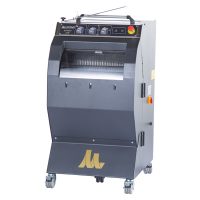
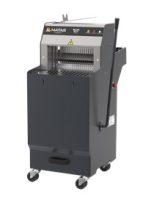

Professional bread slicing machines - check out the Bagmasz range
The choice of the right bread slicer depends on the scale of production: for large bakeries, we recommend belt slicers with a capacity of up to 1,500 loaves/hour. Shops and catering outlets should bet on self-service or semi-automatic machines that combine compact dimensions with easy cleaning and precise slicing.
Belt slicer, is the best choice for large bakeries and continuous production facilities. The loaves move automatically on the belt, ensuring a smooth process and efficiency up to 1500 loaves per hour. Belt models are often equipped with a bag blower, so that the slicing and packaging of the bread is done in one step.
Automatic and self-service slicer is suitable for bakery shops and supermarkets where customers cut and pack the bread themselves. This solution combines convenient handling with a hygienic slicing process.
Semi-automatic and manual slicer, is an option for smaller bakeries, catering establishments, restaurants, hospitals and canteens. Its compact dimensions and simple operation mean that no training is required to implement the machine.
ECO Slim Slicer, is the option for outlets with limited space. It combines low energy consumption with high slicing precision, which is why it is a popular choice for small bakeries and neighbourhood shops.
Bread slicers are available in a variety of sizes, from compact models less than 500 mm wide to large belt devices occupying more than 1.2 m in length, so it is always advisable to measure the available working space before purchasing. The price of a bread slicer depends on the level of automation and capacity of the machine. Compact semi-automatic models cost several thousand zlotys, while fully automatic bread slicing machines cost tens of thousands of zlotys. It is worth treating this purchase as an investment, the return of which is achieved by saving working time and eliminating losses associated with uneven slicing.
Bread slicer for bakeries - which machine to choose?
A bread slicer for a bakery must meet much higher requirements than a machine for a small shop or restaurant. What counts is performance, reliability in continuous operation and the ability to withstand intensive use for many hours a day.
In a bakery setting, the following work best belt bread-cutting machineswhich allows slicing without interrupting the production process. The machine automatically receives the loaves, slices them into even slices and transfers them to the packaging system, eliminating bottlenecks in the production line.
Components in contact with the bread should be made of stainless steelThe base is corrosion-resistant and easy to clean. Stable base and castors with brakes ensure safe working even on slippery floors. A good bread slicing machine in a bakery should also allow quick adjustment of slice thickness without the use of tools, allowing different types of bread to be sliced without downtime.
A modern bread machine should be able to cope with both soft toasted bread and hard rye or multigrain bread, without changing settings between loaves. Herkules belt slicer has in addition folding rear slidewhich can be folded away after use, making it easy to store the unit and keep the shop floor tidy.
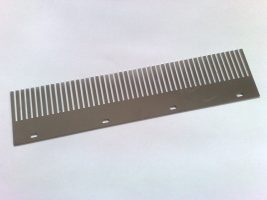
If your bakery produces bread in large quantities, also check out our slicer kniveswhich have a direct impact on the cutting quality and service life of the entire machine.
Bread slicer for the shop - what to choose for the point of sale?
A bread slicer for the shop must combine speed of operation, ease of use and an aesthetically pleasing design to match the sales space. A large supermarket has different requirements from a neighbourhood bakery with a counter.
Self-service slicers are best suited to bakery shops and supermarkets, allowing customers to cut and pack the bread themselves without the involvement of staff. The machine should be intuitive to use and have safety features to prevent accidental contact with the blade. In smaller outlets, where the slicing is done by an employee, a semi-automatic slicer with compact dimensions is a better choice.
Regardless of the model, the shop's bread slicer should be easy to clean on a daily basis and access to the blades and guides should be possible without the use of tools. Regular bakery machinery service avoids costly downtime during peak sales hours.
Professional bread slicer - key specifications
A professional bread slicer differs from cheaper solutions in terms of build quality, precision of the slicing mechanism and durability under intensive use. Before choosing a model, it is worth understanding which parameters have a real impact on the daily operation of the machine.
Engine power and performance
Engine power determines how well the slicer handles different types of bread. A weaker motor when slicing dense multi-grain bread will slow down, run the blade unevenly and wear out more quickly. Professional bread-cutting machines are equipped with motors that provide constant speed regardless of the hardness of the loaf. Semi-automatic and automatic models operate at a power of 0.37 kWwhile the efficient Herkules belt slicer has a motor 0.85 kW, which translates into the ability to slice even the toughest bread in continuous operation.
Slice thickness adjustment
Thickness adjustment mechanism in a good bread slicer should allow the settings to be changed without using tools and without stopping the machine. The standard slice thickness on Bagmasz slicers is 11 mm, and other thicknesses are available on request, allowing the machine to be adapted to the specific products to be cut, from thin toast to thick slices for sandwiches.
Blade quality and materials
Stainless steel blade, is standard on professional slicers, but the quality of the steel and the geometry of the blade are very important for the precision of the cut and the life of the knife. A dull or ill-fitting blade will tear the texture of the bread instead of cutting it, which is particularly noticeable when slicing crisp gluten-free bread. Check out our range slicer knivesso that the machine always operates with the blade in optimum condition.
Safety and stability
Safety limiters, emergency stop button i Locking castors, are elements that must be standard in a professional appliance. The stable base eliminates vibrations during slicing and the crumb tray makes it easier to keep the workplace clean.
Bread slicer maintenance - how to look after the blade and avoid problems?
Regular maintenance of the bread slicer is a prerequisite for a long service life of the appliance and consistent slicing quality. Most problems, such as uneven slices, wedging of the loaf or rusting of the blade, are due to negligence in daily care and not to a defect in the machine.
How to clean the slicer blade properly?
Blade cleaning should take place after each working shift, and even more frequently when slicing moist bread. Proper cleaning involves three steps:
- Switch off the appliance and unplug it from the power supply before coming into contact with the blade.
- Remove crumbs from the tray and guides with a soft brush, not a metal one.
- Wipe the blade with a damp cloth with approved food-grade detergent and dry thoroughly.
In a bakery environment where humidity is constantly elevated, even high-quality steel requires regular drying and periodic lubrication of moving parts.
Why does bread get wedged in the slicer and how to prevent it?
Wedging of the loaf is usually due to one of three causes: a blunt blade, insufficient motor power or incorrect positioning of the loaf in relation to the guides. A dull blade kneads the loaf instead of cutting it, which is why it is important to replace it regularly. slicer knives is the basis for the smooth running of the machine. If wedging occurs despite a fresh blade, the reason may be a mismatch between the motor power and the type of bread.
How do you cut gluten-free bread so it doesn't crumble?
Gluten-free bread is more crumbly and has a moister flesh than wheat bread and therefore requires different slicer settings. Four principles are key when slicing this type of bread:
- Sharp blade - The blunt knife tears apart the delicate flesh structure.
- Low feed rate - reduces pressure and limits crushing.
- Chilled loaf - completely cooled bread slices much better.
- Thicker slice - reduces the risk of slices falling apart during packaging.
If in doubt, please consult our servicing of bakery machinery.
The most common mistakes when choosing a bread slicer
Choosing a bread slicer often results in a mistake that only becomes apparent after several weeks of use. Here are five of the most common mistakes made by bakery and food service owners.
- Choice of model based solely on price. Cheapest bread slicer rarely proves to be the cheapest solution in the long term. A weaker motor and inferior blade quality mean faster wear and higher service costs.
- Underestimation of required capacity. A unit constantly operating at the limit of its capacity will wear out several times faster. Always select the capacity with a margin of at least 20-30% above the current demand.
- Ignoring the specificity of the products being cut. Bread slicing machine selected for wheat bread may not cope with dense rye bread or crisp gluten-free bread. Determine what types of bread you will be cutting most often before purchasing.
- Overlooking running costs and parts availability. Check that the manufacturer provides access to slicer knives and whether there is an authorised bakery machinery service. The lack of spare parts, is a real risk to production continuity.
- Purchase without consideration of available space. Bread slicer needs a work zone on both sides: from feeding the loaves and collecting the slices. Before purchasing, measure the available space and compare with the dimensions of the machine together with the required operating zone.
FAQ - bread slicers - frequently asked questions
What is the difference between an automatic and semi-automatic slicer?
An automatic slicer independently accepts, slices and passes the loaf to the packaging system. A semi-automatic slicer requires manual feeding of the loaf, while the slicing itself is done automatically. Automatic models are the choice of large bakeries and factories, while semi-automatic models work well in smaller premises and shops.
How often should I replace the knives in my bread slicer?
In bakeries operating continuously, the slicer blades are replaced every few months, in smaller outlets even once a year. Signals for replacement are uneven slices, fraying of the bread at the edges and a noticeably higher resistance when slicing.
Is the bread slicer suitable for slicing other products?
No. Bread slicers are optimised for bread and should not be used to cut ripened cheese or cold cuts. Slicing other products accelerates blade wear and poses a hygiene risk in bakery production.
Does the bread slicer need a professional service?
Yes. Regular maintenance can detect wear and tear on components before failure occurs. Bagmash offers service of bakery and confectionery machinery operating 7 days a week and provides a replacement unit in the event of a major fault.
What types of bread slicers are available?
There are four main types of bread slicers on the market: belt, automatic and self-service, semi-automatic and manual, and compact energy-saving models. For a detailed comparison, see our full range slicers.
Need professional advice on choosing a slicer? Contact our advisors to match the machine to your production needs.


