
Dough rollers
A dough rolling machine (a.k.a. confectioner's rolling pin, confectioner's rolling machine, dough mangle or dough rolling machine), is a device used to stretch and level dough by means of rotating rollers that form a flat sheet or ribbon of a preset thickness. A professional dough rolling machine works on the principle of two pairs of rollers pressing the dough from above and below, guiding it through the working slot. Dough thickness adjustment is carried out in stepless or incremental steps, depending on the model, allowing the parameters to be precisely matched to the type of product.
Unlike manual rolling, the dough rolling machine works uniformly and reproducibly, eliminating variations in thickness between successive sheets. This is crucial in batch production, where consistent quality of each batch matters.
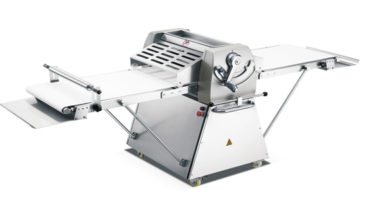
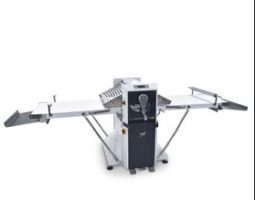
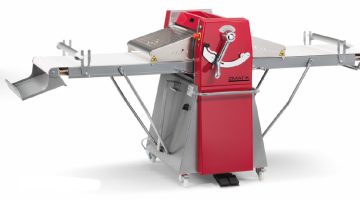
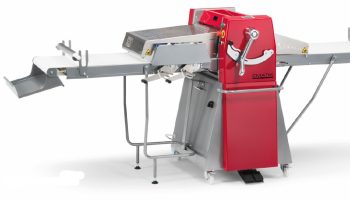
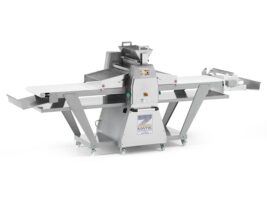

What types of dough rollers does Bagmasz offer?
The dough rollers in the Bagmasz range include four main types of professional confectionery and bakery rollers, selected to suit different scales and specifics of production:
- Manual roller blades - are proven in smaller plants and confectioneries where full operator control of the dough rolling process is important. Quiet operation and compact design facilitate integration into limited working spaces.
- Electric rolling pins for dough (e.g. model WG-650) - the electric motor-driven dough roller ensures a constant speed of the dough through the rollers, resulting in an output rate of several dozen sheets per hour. Ideal for bakeries and pizzerias with medium to high production.
- Rolling pins with punching station - combine the function of the dough mangle with the cutting of ready-made portions, reducing the preparation time of, for example, dumpling or cookie dough.
- Automatic dough rollers (LAMINATO model and others) - advanced confectionery rollers with automatic sheet reversal and programmable thickness control. Designed for intensive production of puff pastry, semi-puff pastry and yeast dough.
Which cakes is a professional rolling pin suitable for?
Dough Roller the professional version handles a wide range of dough types. Our equipment works well with:
- puff pastry and half puff pastry - requiring repeated, precise lamination without heating up the fat,
- shortcrust pastry - delicate, susceptible to damage from excessive pressure,
- yeast dough - flexible, requiring even pressure,
- dumpling cake - where the uniform thickness of the sheet counts, as it directly translates into cooking time and the appearance of the dumplings,
- pizza dough - requiring a thin disc with a precise diameter,
- pasta and biscuit dough - serial rolling with repeatable parameters.
The rollers handle dough batches in the range 100-700 g in a single pass. This means that both a small rolling machine for pierogies made in batches of several dozen pieces and a powerful puff pastry machine will find their place in our range.
Manual or electric rolling mill? How do I choose the right machine?
The choice between manual and electric dough rollers depends on three key factors: the scale of production, the type of dough and the expected yield.
Opt for a manual rolling mill if:
- you run a small patisserie or bistro with a production of up to a few dozen portions per day,
- full operator control and low energy consumption are a priority,
- you want compactness.
Opt for an electric rolling pin if:
- you produce several hundred or more sheets of dough a day,
- you want reproducible thickness in each batch without involving the operator,
- you are working with puff pastry or yeast dough, which requires a steady, uninterrupted passage through the rollers.
Electric dough rolling machine is now a standard in every bakery and pastry shop with a production of more than a few dozen portions per day. The motorised roller drive eliminates the variability resulting from the operator's strength and speed, guaranteeing the same thickness of each sheet throughout the shift.
Rolling pins with punching station is the choice for plants that want to combine two production steps in a single machine and reduce the time needed to prepare finished batches of dough.
How do you choose a rolling pin for a particular type of dough?
The type of dough determines what kind of machine you really need, and this is a nuance that is often overlooked by general guides.
Shortcrust pastry is the most sensitive to pressure and temperature. Excessive pressure from the rollers tears them apart, and the heat from the motor can melt the fat and change the texture. When dealing with crisp, rollers with a precise, stepless thickness adjustment and the ability to operate at low gear ratios.
Yeast dough is springy and tends to shrink after passing through rollers. Requires rollers with automatic web reversal (e.g. LAMINATO), which allow multi-pass rolling without manual turning of portions.
Puff pastry and half puff pastry This is the most demanding type. The key here is to laminate without overheating the butter in layers. Dedicated automatic confectionery rollers with adjustable roller speeds and programmable runs are the only professional solution here.
Dumpling and pasta dough is relatively easy to machine, but requires a very precise and repeatable sheet thickness. This is where both manual rollers and electric models with 0.5 mm adjustment will work well.
How to properly prepare the dough before rolling it out and avoid sticking?
Dough sticking to rollers is one of the most common problems in bakery and confectionery production. It can be effectively eliminated.
5 proven methods to prevent sticking in professional rolling pins:
- Flour topping of belt and rollers before each batch of dough, especially for doughs with high moisture content.
- Use of Teflon film or tape on conveyor belts for the most sticky doughs (e.g. yeast dough with a lot of sugar).
- Maintaining the correct dough temperature - a dough that is too warm is sticky; a dough cooled to 4-8°C passes more easily through the rollers without deforming.
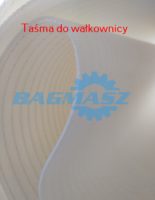
- Regular replacement of conveyor belts - worn, rough bands collect dough residues and increase the risk of sticking. Bagmash offers dedicated belts for rolling pins as spare parts.
- Ongoing cleaning of the rollers after each batch - Dough residues hardened on the rollers cause uneven pressure and affect the thickness of subsequent sheets.
How do I clean my pastry roller?
Food processors cleaned after each production shift. Proper maintenance extends the life of the machine and is a sanitary requirement in HACCP-certified plants.
Basic cleaning principles:
- Shafts and steel casing Wipe with a damp cloth and neutral detergent, then dry. We avoid aggressive chemicals that corrode the surface.
- Conveyor belts - any residual dough is removed with a soft brush before rinsing, so as not to rub the dough deeper into the structure of the belt.
- Working rollers should not come into contact with pressurised water (pressure washers) or be immersed, unless this is expressly permitted by the manufacturer in the documentation.
- After washing rollers and working slots lightly dust with flour before changing again, which creates a natural non-stick layer.
Regular maintenance (every 6-12 months) and servicing at an authorised dealer, such as Bagmash, guarantees fault-free operation.
The most common mistakes when selecting and using dough rollers
When choosing or using a dough rolling machine, it is easy to make some common mistakes. It is worth knowing these before you decide on a particular model.
- Underperformance of the device - Selecting a model that is too weak for the actual production scale leads to motor overload and shortens the service life of the rollers.
- Ignoring the thickness adjustment range - Not every rolling pin will handle both thin pizza dough (1-2 mm) and thick sheets of dumpling dough (3-5 mm). Check the adjustment range before purchasing.
- Neglect of belt cleaning - dirty belts are the most common reason for uneven rolling and complaints about product quality.
- No preventive service - Electric rollers require regular lubrication of the gearbox and inspection of the rollers. Lack of maintenance shortens the life of the machine by 30-40%.
Dough rollers versus full bakery equipment. What else is worth having?
The dough rolling machine is a key, but not the only, component of efficient bakery and confectionery production. To ensure that the dough has the right texture before rolling it out, it is worth ensuring that the kneading is done properly. Our cake mixers ensure the consistency of the dough and prepare it for further processing. After shaping, the sheets and finished products are sent to the bakery ovenswhich guarantee even baking. The whole process is supported by a wide range of bakery equipmentwhich you will find in Bagmasz.
A comprehensive approach to plant equipment optimises every stage of production, from dough kneading to the finished product on the shelf.
Why choose a dough rolling machine from Bagmasz?
Bagmasz has been supplying professional confectionery and bakery rollers for years, serving bakeries, patisseries, pizzerias and caterers in Poland and abroad. Our range includes equipment from renowned manufacturers, also available in 230V powered versions, ready to work without complicated electrical installation.
We offer:
- technical advice in the selection of the roller to suit the scale of production and the type of dough,
- service and spare parts (including dedicated belts for rolling machines) throughout Poland,
- possibility of price enquiry directly via the form on the website.
Do you have questions about choosing a dough rolling machine? Contact us and our team will advise you on the best solution for your establishment.
FAQ - Pastry brakes
Is a rolling pin suitable for dumpling dough?
Yes. Dumpling dough roller allows an even sheet with a reproducible thickness to be obtained, which has a direct effect on the uniform cooking time and the aesthetic appearance of the dumplings. Models with a punching station additionally enable ready-made dough discs to be punched out in a single working step.
What is the capacity of a dough roller?
The dough rolling machines in the Bagmasz range handle batches of 100-700 g in one pass. The exact hourly throughput depends on the model, the type of dough and the set sheet thickness. If in doubt, our team will advise which model will provide the required throughput for your plant.
Do the rolling pins in the Bagmash range require a special electrical installation?
No. The devices available in the Bagmash range are powered from a standard socket. 230 Vwhich means that they do not require three-phase installation or additional electrical work. A standard connection is all that is needed, making it easy to get the machine up and running even in limited premises.
Where can I get spare parts for the rolling machine, e.g. belts?
Bagmasz offers dedicated belts for rolling machines and other spare parts, available directly from our shop. Regular replacement of worn belts is a key part of preventive maintenance of your machine. A worn belt collects dough residue and causes uneven pressure on the rollers, which reduces the quality of the finished products.
Will a dough roller work well in a pizzeria?
Yes. Our machines handle pizza dough, allowing you to obtain a thin disc of precise diameter and uniform thickness. Bagmasz also offers specialised pizza rollers, dedicated to pizzeria-style establishments.


